The short answer
Yes, a marble dining table is worth it if you want a table that looks timeless, lasts for decades and you are happy to wipe up spills quickly. Marble is hard-wearing and heat-tolerant, but it is softer than granite and can stain or etch from acidic food and drink. If you have young kids or want zero maintenance, a sintered stone or ceramic "marble-look" top gives a similar style with far less care.
Are marble dining tables still in style?
Yes. Marble has been used in furniture for centuries, and Kiwis are still actively shopping for it. In New Zealand, "marble dining table" is searched around 320 times a month, and "marble dining table nz" another 210 times a month (source: DataForSEO, Google NZ search volume, November 2026).
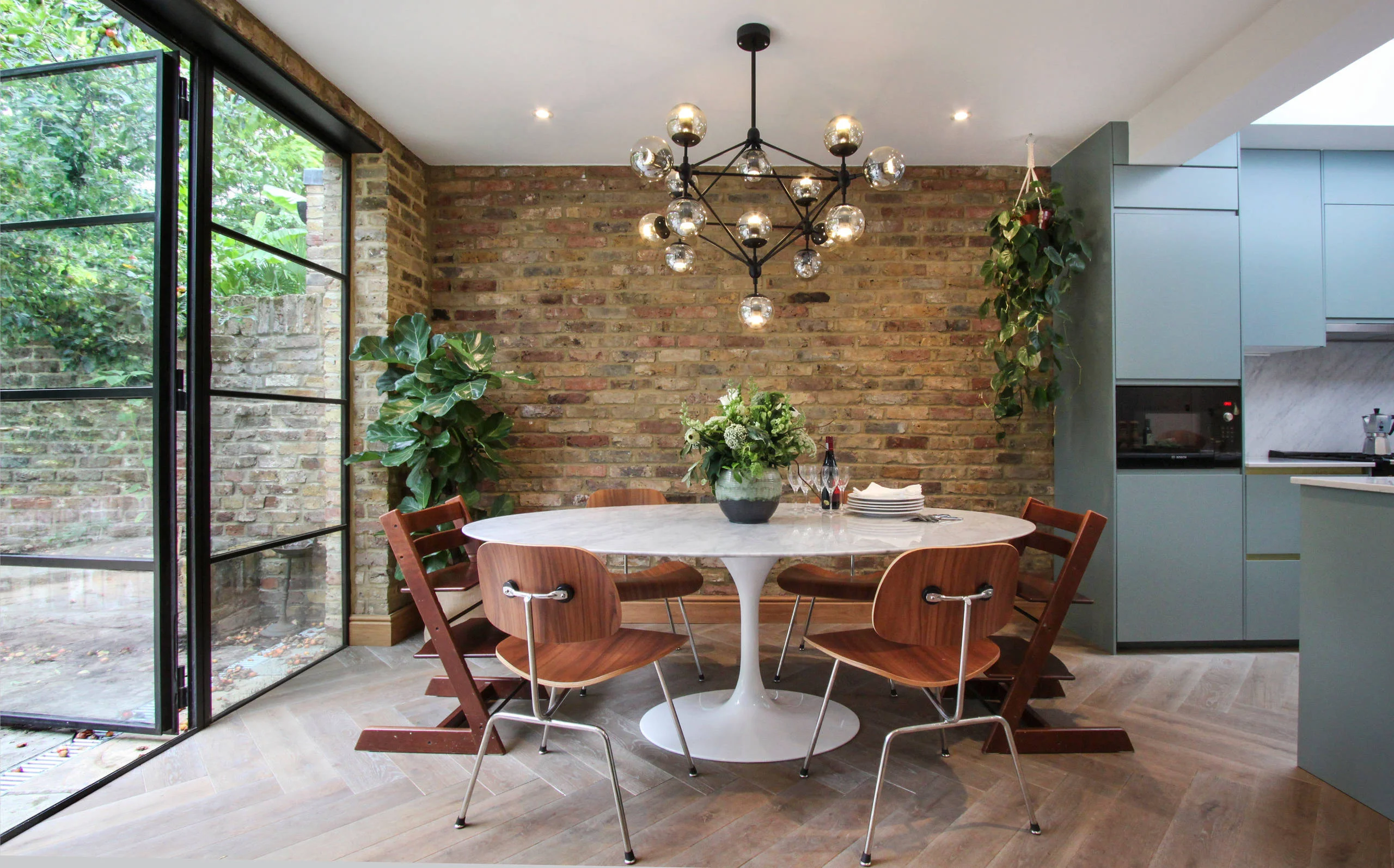
The look has shifted, though. Glossy white tables with gold legs are giving way to round tops, darker stones like Calacatta Black, and sculptural bases. A round marble-look table with a bold base reads as modern, not dated.
The pros of a marble dining table
- It looks expensive and never repeats. Every slab of real marble has its own veining, so no two tables are exactly alike.
- It lasts for decades. Stone does not warp, swell or loosen at the joints the way timber or veneer can. With proper care, marble often lasts 50 years or more, and some sources quote a range of 20 to 100 years (source: Tasting Table, interview with interior designer Cara Woodhouse).
- It suits almost any room. Marble works with timber floors, concrete, wool rugs and both modern and classic chairs.
- It feels solid. A stone top is heavy, so the table stays put. The marble-look tables in our range weigh around 55 kg each (source: Top Furniture product specifications).
- It holds its appeal. Because marble does not go in and out of fashion quickly, a good table still looks right years later, and real stone pieces keep resale interest on the second-hand market.
The cons of a marble dining table
- It scratches more easily than you might think. Marble is mostly calcite, which rates just 3 on the Mohs hardness scale, compared with 7 for quartz (source: Tasting Table, reporting Consumer Reports testing). Granite sits at around 7, and a steel knife blade at about 6.5, so a knife can scratch marble but not granite (source: Slippery Rock Gazette, stone restoration expert Bob Murrell).
- Acid leaves marks. Marble is made of calcium carbonate, which dissolves even in very dilute acids (source: US General Services Administration). Lemon juice, vinegar, wine and tomato sauce can leave dull patches called etch marks.
- Sealing does not stop etching. A sealer helps with stains, but it does nothing for the acid reaction that causes etching (source: Tasting Table).
- It can chip. In Consumer Reports' tests of 16 countertop materials, marble chipped and cracked more readily than granite or quartz (source: Tasting Table, reporting Consumer Reports testing).
- It is heavy. Moving house or rearranging the room usually takes two people.
Marble vs wood vs glass vs sintered stone
Marble wins on looks and longevity, wood wins on warmth, glass wins on lightness, and sintered stone wins on easy care. Here is how the four most common dining table tops compare in everyday use.
| Marble | Wood | Glass | Sintered stone (marble-look) | |
|---|---|---|---|---|
| Look and feel | Cool, luxurious, unique veining | Warm, natural, relaxed | Light, modern, airy | Marble look, smooth and uniform |
| Scratches | Scratches fairly easily (Mohs 3) | Scratches and dents, but can be sanded | Resists light scratches, can chip at edges | Highly scratch-resistant |
| Heat | Use trivets; can mark | Heat and water rings are common | Use trivets; sudden heat can crack it | Very heat-tolerant (fired at over 1,200°C) |
| Spills and stains | Stains and etches from acids | Can stain and swell with water | Wipes clean, shows smudges | Porosity under 0.08%, wipes clean |
| Upkeep | Reseal every 6 to 12 months | Oil or refinish over time | Daily wiping of fingerprints | Soap and water only |
| Lifespan | Often 50+ years | Decades with refinishing | Long, if not chipped | Long, very stable |
| Best for | Statement dining rooms | Family homes and rustic styles | Small spaces and apartments | Busy homes wanting the marble look |
Sources: marble hardness from Tasting Table (reporting Consumer Reports testing). Marble lifespan and resealing from Tasting Table (interview with Cara Woodhouse). Sintered stone firing temperature and porosity from Neolith product data on ArchDaily.
Our take: choose marble if you want a centrepiece with character. Choose wood for warmth, glass for a small room, and marble-look sintered stone if you want the marble style with far less care.
Which marble is best for a dining table?
The best choice depends on how you live, not just how it looks.
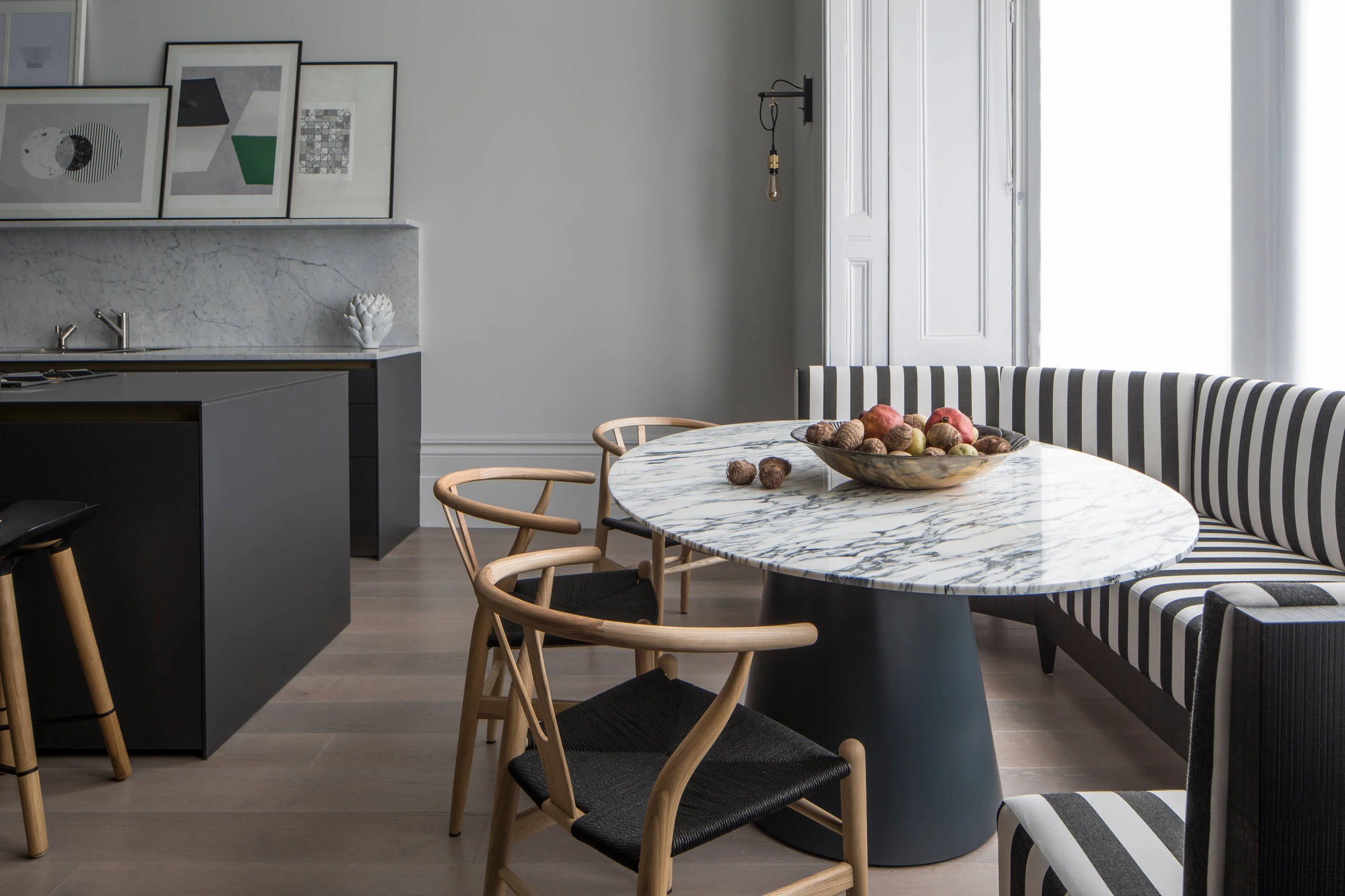
- Carrara (white with soft grey veins): the classic choice. It is easy to find, but light colours show stains and etch marks more clearly.
- Calacatta (white with bold veins): dramatic and luxurious. It shows marks in the same way as Carrara.
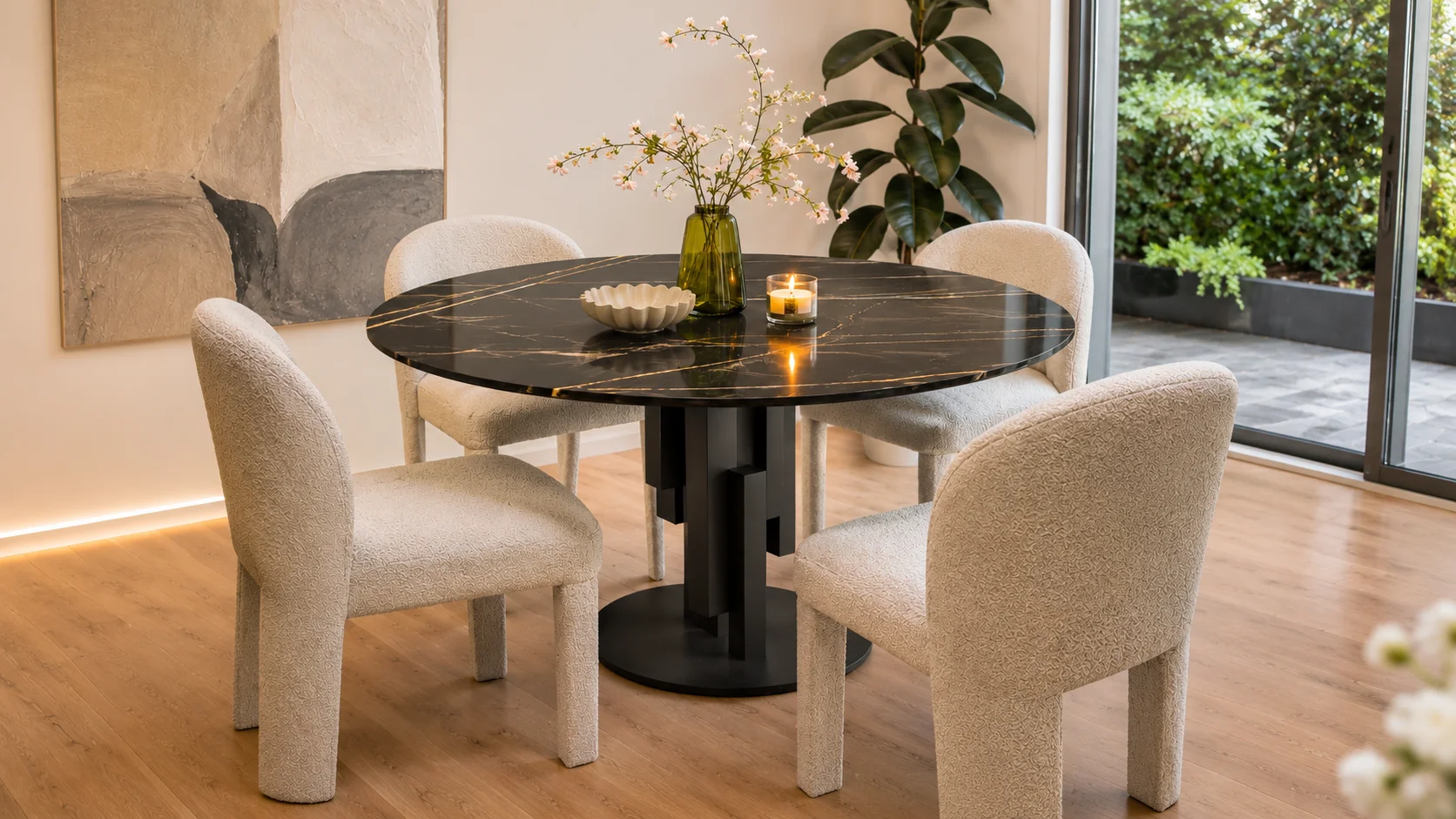
- Dark marble, such as Calacatta Black or Nero Marquina: a strong, modern look that hides small marks well and suits Kiwi homes with timber or concrete floors.
- Honed vs polished finish: a honed (matte) finish hides etching far better than a high-gloss polish. Designers recommend honed marble if you want everyday wear to blend in (source: Tasting Table, interview with interior designer Cara Woodhouse).
For a busy family home, a dark or honed finish, or a marble-look sintered top, is the most forgiving option.
How to care for a marble dining table
Looking after real marble takes a few minutes a week, not hours. Follow these simple habits:
- Wipe spills straight away, especially wine, coffee, citrus and tomato.
- Clean with a pH-neutral stone cleaner or warm water and a drop of mild dishwashing liquid. Skip vinegar, lemon and bleach.
- Use coasters, placemats and trivets so hot dishes and glasses never sit directly on the stone.
- Reseal every 6 to 12 months, depending on how much you use the table (source: Tasting Table, interview with interior designer Cara Woodhouse).
- Do the water test. Drop a little water on the surface. If it darkens the stone instead of beading, it is time to reseal.
Sintered stone is simpler. It does not need sealing, and a soft cloth with warm soapy water is all it needs.
How much does a marble dining table cost in NZ?
Prices for marble and marble-look dining tables in New Zealand range from about $299 to over $12,900 (source: Google Shopping NZ results for "marble dining table nz", November 2026).
| Price band (NZD) | What you usually get |
|---|---|
| Under $1,000 | Sintered stone or ceramic marble-look tops, often on sale |
| $1,000 to $4,000 | Larger sintered stone tables and some real marble tops |
| $6,000 to $13,000 | Solid natural marble or designer stone tables |
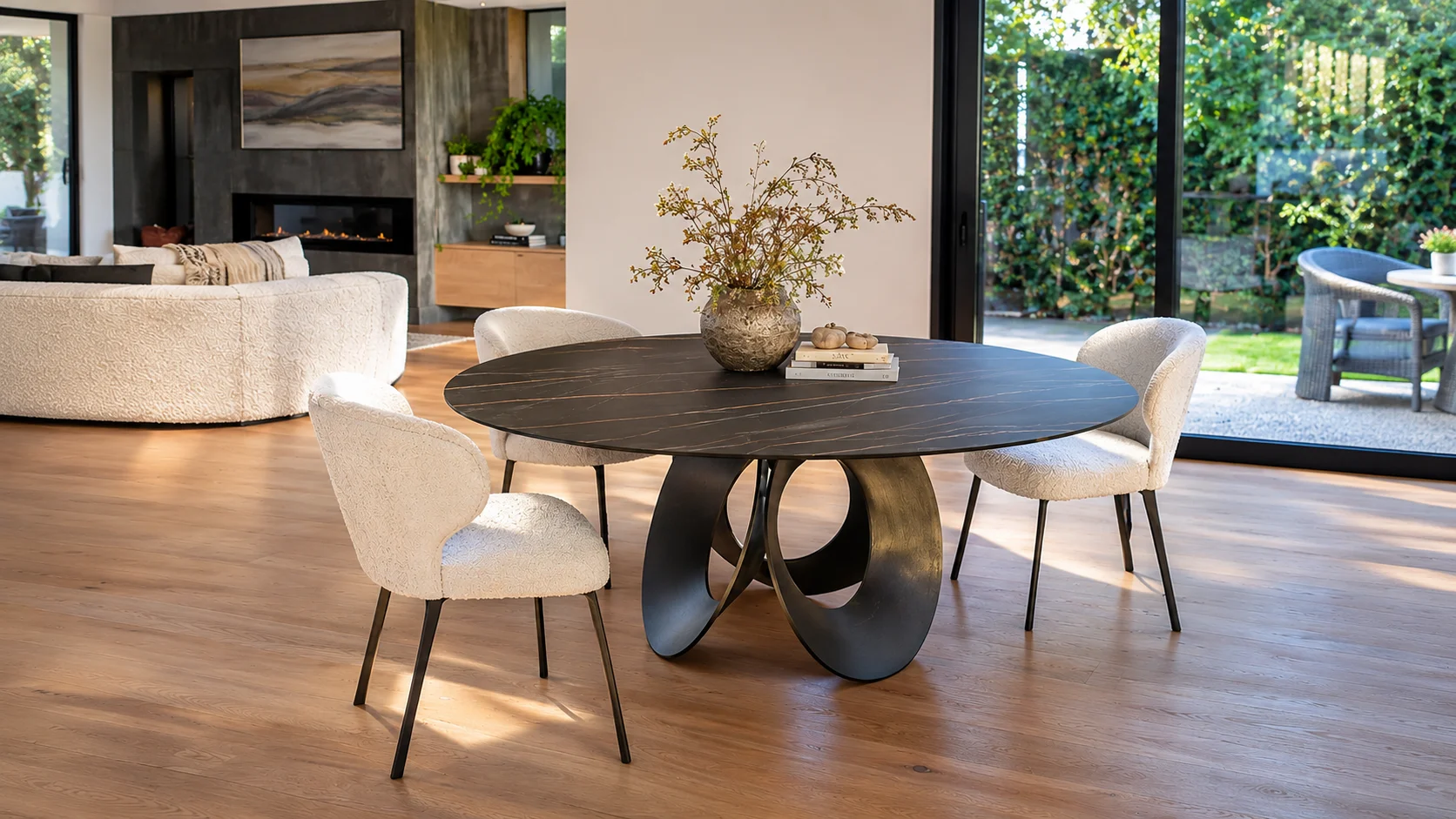
At Top Furniture, two of our round marble-look tables sit in the first band at the time of writing. The Oracle Dining Table has a 135 cm Calacatta Black sintered stone top on a sculptural carbon steel base. The Skyline Dining Table has a 120 cm top in the same finish, with a base inspired by a city skyline. Both are $999 (down from $2,250 to $2,300), weigh about 55 kg and come with a 12-month warranty (source: Top Furniture product pages).
Want to compare shapes and sizes? Browse our full range of dining tables.
The verdict: who should buy a marble dining table?
A real marble table is worth it if you:
- love natural stone and want a one-of-a-kind piece
- are happy to wipe spills quickly and reseal once or twice a year
- see a little patina over time as character, not damage
A marble-look sintered stone table is the smarter pick if you:
- have young kids, pets or lots of dinner parties
- want the marble style without sealing or worrying about wine and lemon
- prefer a lower price and a surface that stays looking new
Either way, a stone-topped table is a long-term buy that can anchor your dining room for many years.
FAQ
Are marble tables timeless?
Yes. Marble has been used in homes for centuries and stays popular because the look works with many styles. Choosing a simple base and a classic shape, like round or rectangular, keeps it from looking dated.
Which is better, a marble or a wooden dining table?
Marble is cooler, heavier and more stain-prone, but it does not warp or dent like timber. Wood feels warmer and hides wear, but it can scratch and mark from heat and water. Pick marble for a statement look and wood for a relaxed, low-fuss feel.
Which is better, a glass or marble dining table?
Marble looks richer and hides fingerprints. Glass is lighter, often cheaper and makes small rooms feel bigger, but it shows smudges and can chip at the edges.
Can you put hot plates on a marble table?
Use a trivet or placemat. Marble handles warmth better than wood, but sudden heat and hot cookware can still mark the surface. Sintered stone is more heat-tolerant, as it is fired at over 1,200°C during production (source: Neolith product data on ArchDaily).
What should you not clean marble with?
Avoid vinegar, lemon juice, bleach and abrasive scrubbers. Acids dissolve the calcium carbonate in marble, even when very dilute (source: US General Services Administration).
How often should you seal a marble dining table?
Every 6 to 12 months, depending on how often you use it (source: Tasting Table, interview with interior designer Cara Woodhouse). Use the water test to check.
What chairs go with a marble dining table?
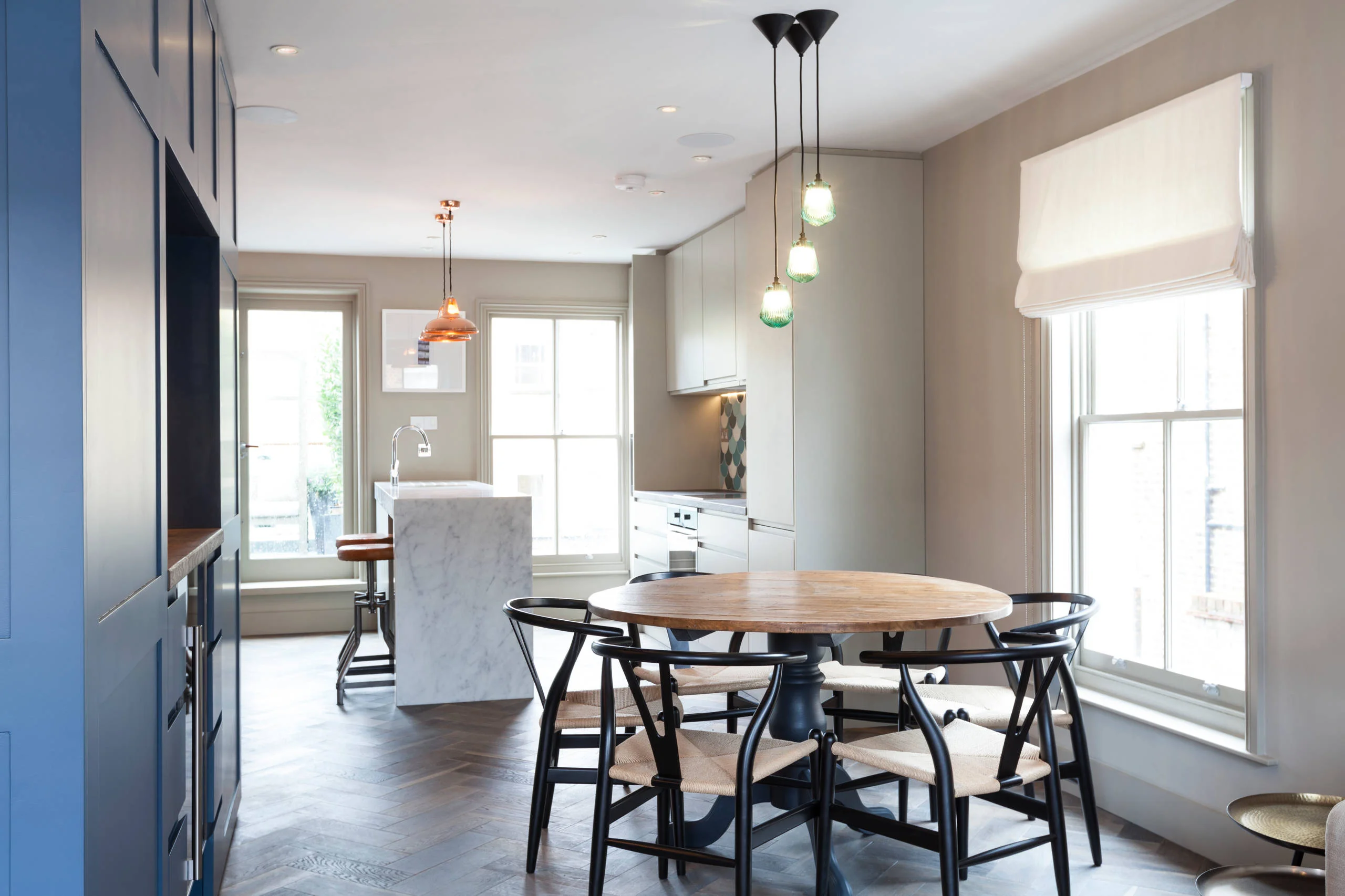
Timber, leather and boucle chairs all soften marble's cool surface. A useful tip is to contrast tones: dark chairs with a white marble top, or lighter chairs with a dark top like Calacatta Black.
Is sintered stone real marble?
No. Sintered stone is made from natural minerals pressed and fired at high heat, with a printed marble pattern on top. It looks like marble but is harder and does not need sealing.
References
- DataForSEO. Google New Zealand keyword search volume for "marble dining table" and "marble dining table nz". Retrieved November 2026.
- Google Shopping New Zealand. Product listings for "marble dining table nz" via DataForSEO SERP data. Retrieved 26 November 2026.
- Regina, L. (2026, 30 August). Granite vs. marble vs. quartz: which countertop is actually the most durable. Tasting Table, reporting Consumer Reports testing.
- Fortey, I. (2026, 20 October). The average lifespan of marble countertops. Tasting Table, interview with Cara Woodhouse.
- US General Services Administration. Marble: characteristics, uses and problems.
- Murrell, B. (2024, March). A basic geology guide for stone and tile pros. Slippery Rock Gazette, p. 17.
- ArchDaily. Neolith sintered stone, Stonetech. Product data.
- Top Furniture. Product specifications for two marble-look dining tables. Retrieved 26 November 2026.